Modal interaction
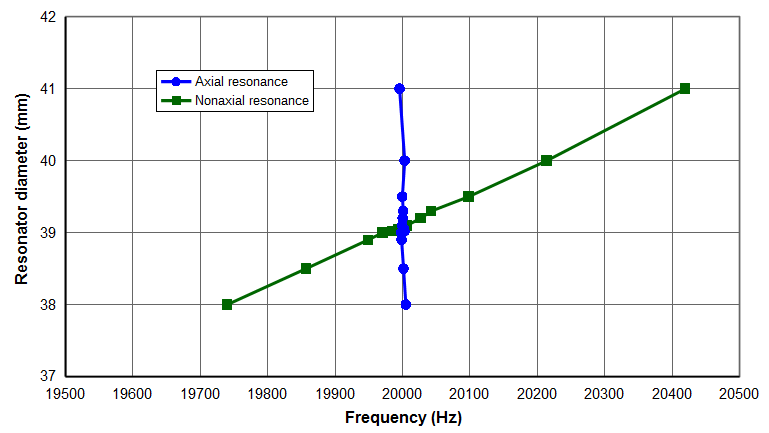
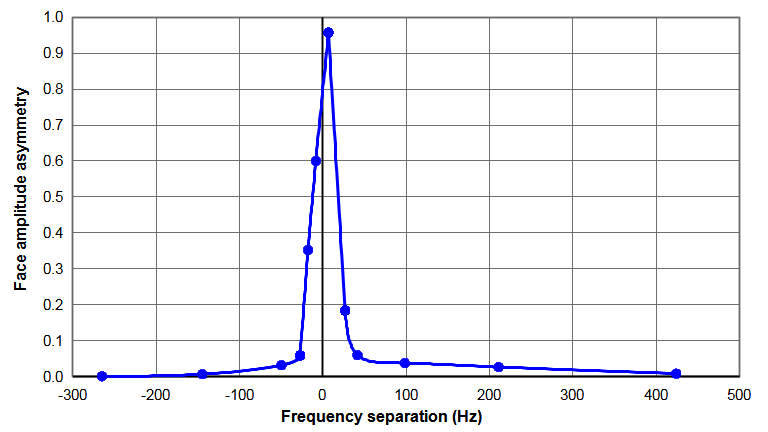
The following shows an examplel of modal interactions for a 20 kHz \( \phi \)40 mm horn (\( c_{tw} \) = 5100 m/sec; Poisson's ratio = 0.33). The horn length was tuned as needed to maintain the axial resonance (the maximum adjustment was 0.1 mm). Also see Amplitude asymmetry.
|
|
| Figure 1. Frequencies for a 20 kHz \( \phi \)40 mm horn |
|
|
|
| Figure 2. Face amplitude asymmetries for a 20 kHz \( \phi \)40 mm horn |
|
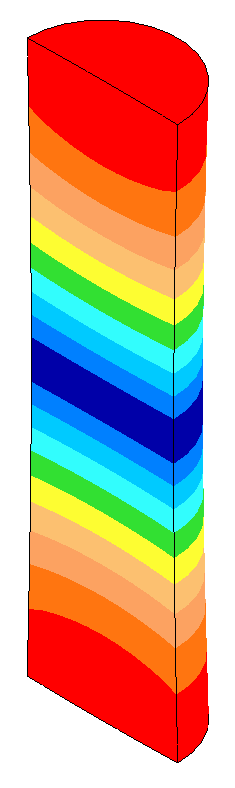
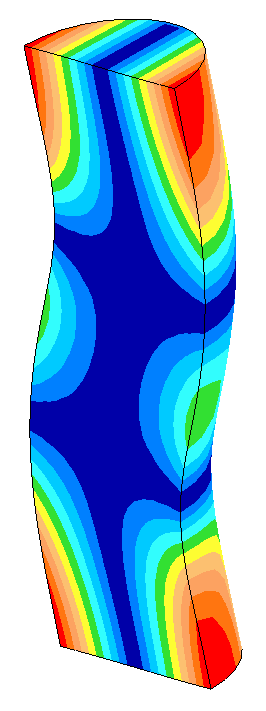
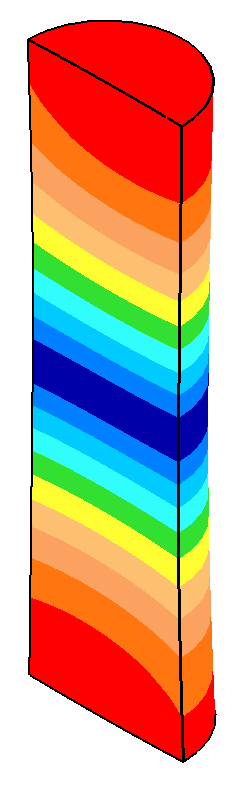
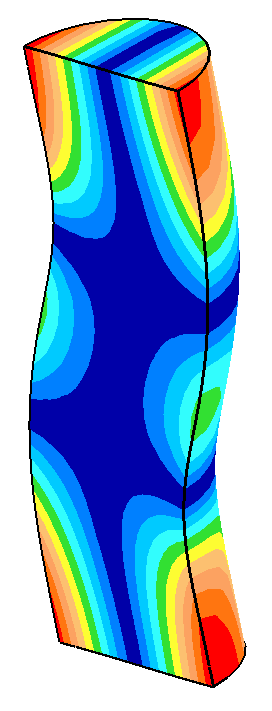
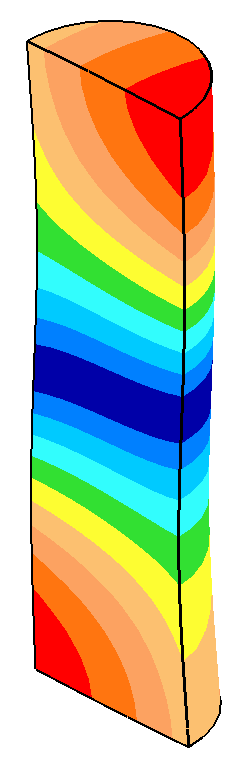
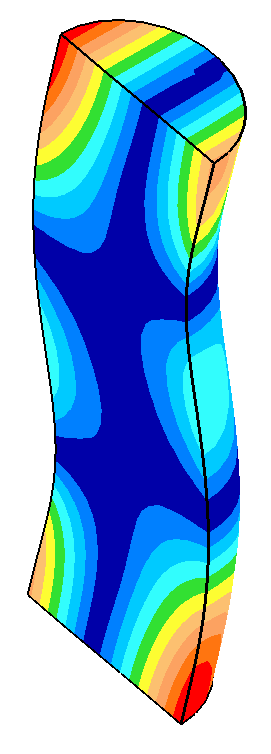
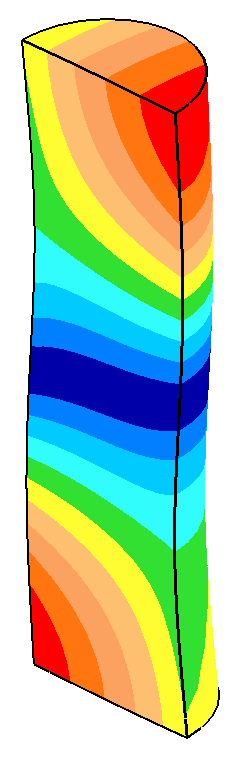
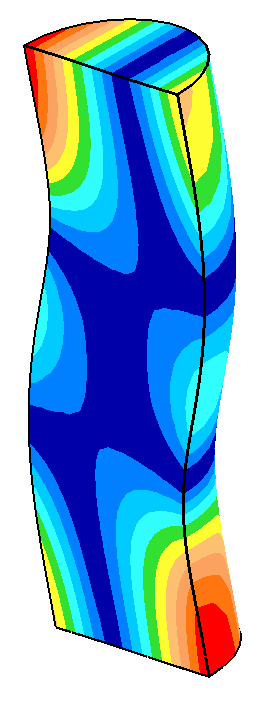
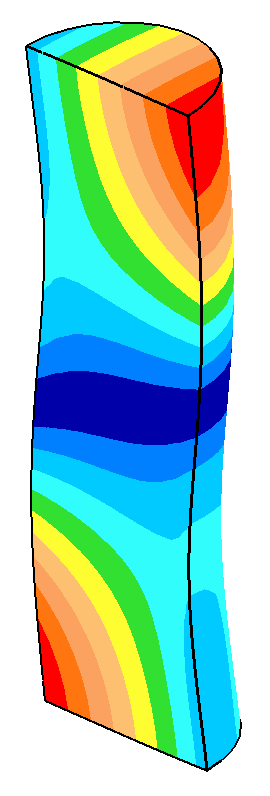
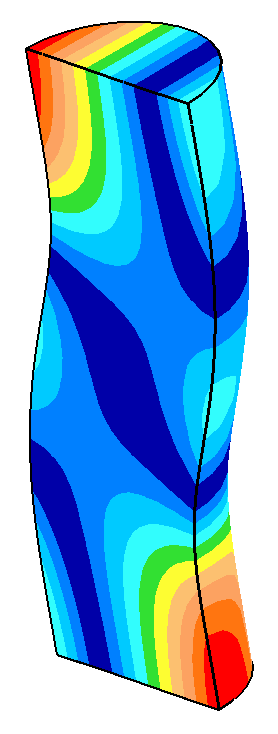
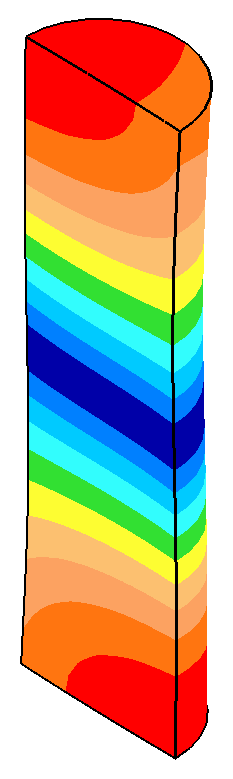
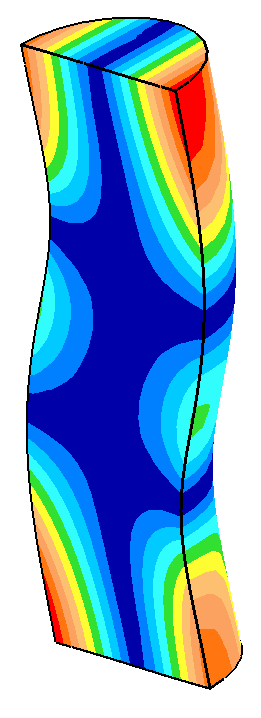
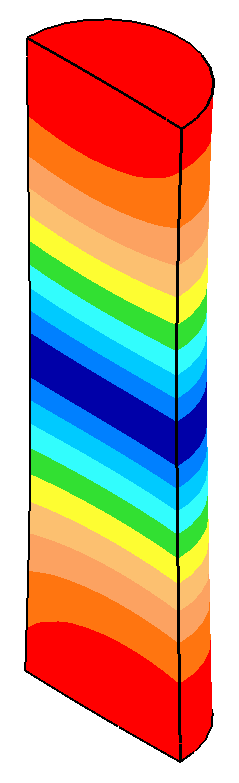
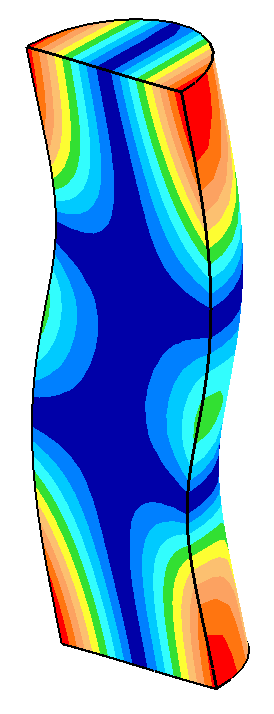
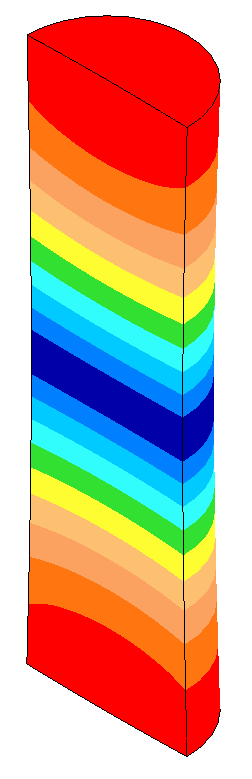
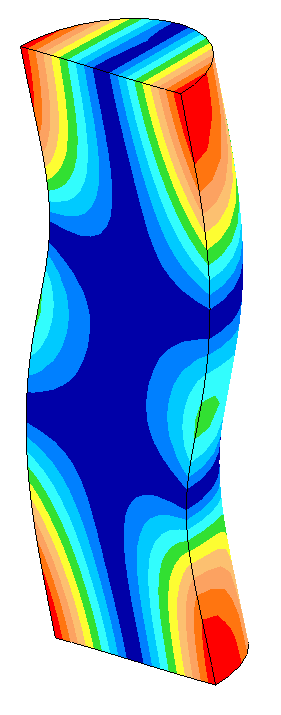
The following table shows some data from the above graphs. Note how quickly the axial mode asymmetry changes for small changes in the horn diameter and as the axial and nonaxial resonances converge. Also note how the nonaxial modeshape changes as it interacts with the axial mode.
Table notes —
- All displacements (as represented by the image colors) are in the axial direction.
- All displacements are displayed at the same scale.
| Diameter (mm) |
Frequency
separation (Hz) |
Axial mode |
Nonaxial mode |
| 38.00 |
-265
|
|
|
20005 Hz
Asymmetry = 0.001 |
|
|
|
| 39.00 |
-27 |
|
20000 Hz
Asymmetry = 0.06 |
|
|
|
| 39.02 |
-18 |
|
19998 Hz
Asymmetry = 0.34 |
|
|
|
| 39.05 |
-12 |
|
20000 Hz
Asymmetry = 0.50 |
|
|
|
| 39.10 |
6 |
|
20000 Hz
Asymmetry = 0.96 |
|
|
|
| 39.20 |
27 |
|
20000 Hz
Asymmetry = 0.18 |
|
|
|
| 39.30 |
42 |
|
20001 Hz
Asymmetry = 0.06 |
|
|
|
| 41.00 |
424 |
|
|
19996 Hz
Asymmetry = 0.008 |
|
|
|